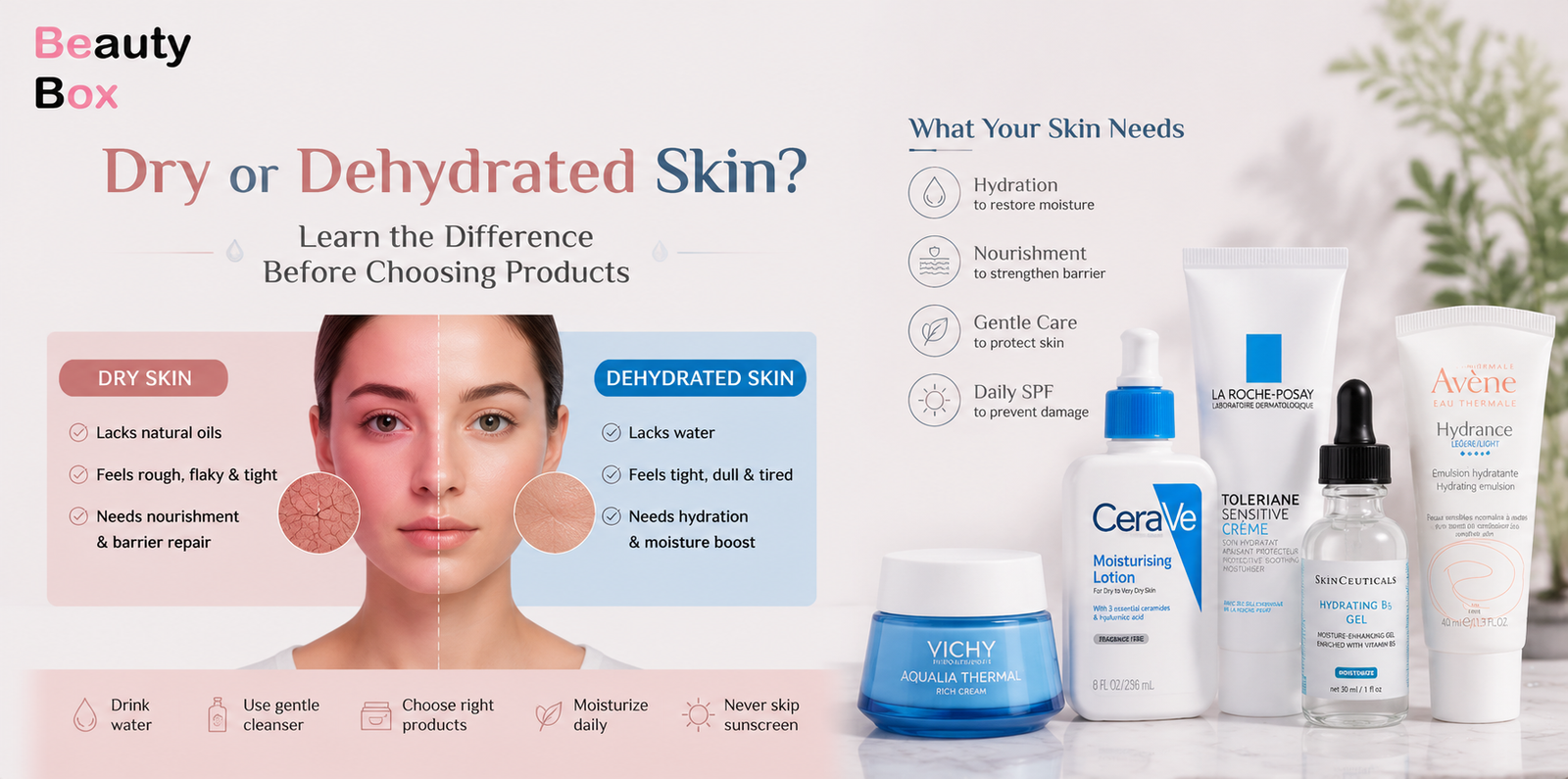
Many people believe dry skin and dehydrated skin are the same. They are not. Although both conditions can make your skin feel rough, tight, or uncomfortable, the causes and treatments are different. Understanding the difference helps you choose the right skin care products and build a routine that delivers visible results.
Using products designed for the wrong concern often leads to frustration. Dry skin treated with oil-control formulas becomes even drier, while dehydrated skin treated with heavy creams may still feel tight because it needs water instead of extra oil.
This guide explains the key differences, common signs, and the best ways to care for each skin condition.
What Is Dry Skin?
Dry skin is a skin type. It naturally produces less oil than normal skin. Because the skin lacks enough natural oils, it struggles to maintain moisture and protect itself from environmental damage.
People with dry skin often notice:
• Rough texture
• Flaky patches
• Tightness throughout the day
• Fine lines appearing more noticeable
• Skin that feels uncomfortable after cleansing
Dry skin usually remains consistent throughout the year, although cold weather and low humidity often make it worse.
Choosing nourishing skin care products with barrier-supporting ingredients helps reduce dryness and keeps the skin soft and comfortable.
What Is Dehydrated Skin?
Dehydrated skin is not a skin type. It is a temporary condition caused by a lack of water within the skin.
Unlike dry skin, dehydration can affect every skin type, including oily and combination skin.
Common signs include:
• Tight skin with an oily surface
• Dull appearance
• Increased sensitivity
• More visible fine lines
• Skin that feels tired and lacks radiance
Many people mistake dehydrated skin for oily skin because their face produces excess oil. In reality, the skin produces more oil to compensate for water loss.
Hydrating skin care products help restore moisture levels without making the skin feel greasy.
Dry Skin vs. Dehydrated Skin
Understanding the differences makes choosing products much easier.
| Dry Skin | Dehydrated Skin |
| Skin type | Temporary condition |
| Lacks natural oil | Lacks water |
| Often flaky | Often dull |
| Usually feels rough | Usually feels tight |
| Needs nourishing oils | Needs hydrating ingredients |
Identifying whether your skin lacks oil or water is the first step toward creating an effective skincare routine.
What Causes Dry Skin?
Several factors contribute to dry skin.
These include:
• Genetics
• Aging
• Cold weather
• Hot showers
• Harsh cleansers
• Frequent exfoliation
As we age, natural oil production decreases. This makes mature skin more vulnerable to dryness and irritation.
Using gentle skin care products designed for dry skin helps strengthen the skin barrier and reduces moisture loss.
What Causes Dehydrated Skin?
Dehydration happens because the skin loses water faster than it can replace it.
Common causes include:
• Not drinking enough fluids
• Air conditioning
• Excessive sun exposure
• Stress
• Lack of sleep
• Alcohol consumption
• Over-cleansing
Even people with oily skin can become dehydrated if they use strong cleansers that strip away moisture.
Ingredients That Help Dry Skin
Dry skin benefits from ingredients that replace lost oils and strengthen the protective barrier.
Look for ingredients such as
• Ceramides
• Shea butter
• Squalane
• Fatty acids
• Cholesterol
These ingredients help reduce water loss while improving softness and comfort.
Choosing high-quality skin care products with these ingredients supports healthier-looking skin over time.
Ingredients That Help Dehydrated Skin
Dehydrated skin responds better to ingredients that attract and hold water.
Some of the most effective ingredients include:
• Hyaluronic acid
• Glycerin
• Panthenol
• Aloe vera
• Sodium PCA
These ingredients improve hydration levels and help skin appear smoother, brighter, and more refreshed.
Why Your Skin Barrier Matters
The skin barrier protects your skin from moisture loss, pollution, bacteria, and environmental stress.
When this barrier becomes damaged, skin loses water more quickly and becomes increasingly sensitive.
Signs of a weakened barrier include:
• Redness
• Burning sensation
• Persistent dryness
• Flaking
• Increased breakouts
Barrier-supporting skin care products containing ceramides, niacinamide, and soothing ingredients help repair the skin and improve long-term hydration.
Build the Right Daily Routine
A simple routine is often more effective than using too many products.
Morning Routine
• Gentle cleanser
• Hydrating serum
• Lightweight moisturizer
• Broad-spectrum sunscreen
Evening Routine
• Gentle cleanser
• Treatment serum if needed
• Moisturizer suited to your skin type
Consistency is more important than using many products.
Common Mistakes to Avoid
Many skincare problems come from incorrect habits rather than poor products.
Avoid these common mistakes:
• Washing your face too often
• Using very hot water
• Skipping moisturizer because your skin feels oily
• Over-exfoliating
• Trying too many new products at once
• Ignoring sunscreen
Choosing suitable skin care products and following a consistent routine usually produces better results than constantly changing products.
How to Choose the Right Products
Instead of buying products because they are popular, focus on your skin’s actual needs.
Ask yourself:
• Does your skin feel rough or simply tight?
• Do you notice flaking or excess oil?
• Is your skin dull or irritated?
Reading ingredient lists is often more valuable than focusing on brand names.
Look for formulas that match your skin concern rather than following trends.
When Should You Seek Expert Advice?
If your skin remains uncomfortable despite following a simple routine for several weeks, professional guidance is worthwhile.
Persistent redness, painful irritation, severe dryness, or ongoing sensitivity may require expert evaluation.
Beauty Box offers a wide range of skin care products suitable for different skin concerns, making it easier to build a routine based on your individual needs rather than guesswork.
Final Thoughts
Knowing whether your skin is dry or dehydrated makes every skincare decision easier. Dry skin needs nourishing oils, while dehydrated skin needs water-binding ingredients. Once you understand the difference, selecting the right skin care products becomes much simpler, and your routine becomes more effective.
Rather than adding more products, focus on choosing formulas that address your skin’s actual concern. With consistent care, gentle cleansing, proper hydration, and barrier-supporting ingredients, your skin will gradually become healthier, smoother, and more comfortable.
If you’re unsure where to begin, explore the carefully selected range of skin care products at Beauty Box. You’ll find solutions for dry, dehydrated, oily, combination, and sensitive skin, along with expert guidance to help you choose products that truly fit your skincare goals.