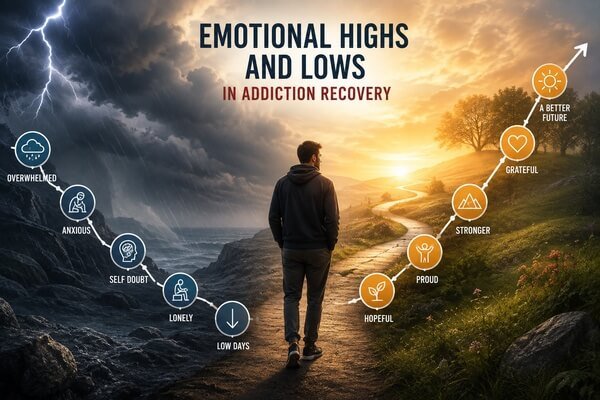
Most people expect withdrawal to be the hardest part of getting sober. What catches many off guard is what comes after: a rollercoaster of feelings so intense they can feel more overwhelming than the substance use ever did. Joy, grief, rage, and hope can all show up in the same afternoon. Understanding why that happens, and what to do about it, can make the difference between a recovery that sticks and one that unravels before it really begins.
This article breaks down the science behind emotional swings in recovery, explains why some of those feelings are dangerously seductive, and offers practical strategies for building genuine emotional stability over time.
Why the Brain Struggles to Regulate Emotion in Early Sobriety
Substances of abuse, whether alcohol, opioids, stimulants, or others, all affect the brain’s reward and emotional regulation systems in profound ways. Dopamine, serotonin, GABA, and norepinephrine are among the neurotransmitters that get disrupted through prolonged use. When someone stops using, the brain does not simply reset overnight. It has to relearn how to produce and process its own feel-good chemicals without chemical help.
The prefrontal cortex, which handles impulse control and emotional reasoning, is one of the last regions to fully recover. Research published by the National Institute on Drug Abuse indicates that certain structural and functional brain changes can persist for months or even years after a person stops using substances. During that window, emotional responses can feel outsized. Small frustrations become crushing. Small victories feel transcendent. Neither reaction is a true picture of reality.
This neurological instability is not a character flaw or a sign that recovery is failing. It is a predictable biological process. Knowing that can take some of the shame out of feeling emotionally volatile and replace it with something more useful: patience and a concrete plan.
The Emotional Timeline: What Many People Experience
Emotional recovery does not follow a straight line, but there are common patterns that clinicians and researchers have observed. The table below outlines general phases that many people in recovery move through, along with the typical emotional themes and challenges of each stage.
| Phase | Approximate Timeframe | Common Emotional Themes | Key Challenges |
| Acute withdrawal | Days 1 to 7 | Anxiety, irritability, physical discomfort | Managing cravings, sleep disruption |
| Early sobriety | Weeks 1 to 12 | Mood swings, brief euphoria, grief, fear | Identifying triggers, avoiding relapse |
| Post-acute withdrawal (PAWS) | Months 2 to 24 | Emotional numbness, low motivation, sudden mood dips | Sustaining hope, building new routines |
| Stabilization | 6 months onward | Growing emotional range, self-awareness | Deepening coping skills, rebuilding relationships |
| Long-term recovery | 1 year and beyond | Greater resilience, occasional setbacks | Preventing complacency, continued growth |
These timeframes vary widely depending on the substance used, the length of use, individual neurobiology, co-occurring mental health conditions, and the quality of support available. They are a general guide, not a guarantee.
Post-Acute Withdrawal Syndrome and the Emotional Flatline
One of the least-discussed challenges in recovery is post-acute withdrawal syndrome, commonly called PAWS. Unlike acute withdrawal, which is primarily physical and resolves within days, PAWS is neurological and can persist for up to two years or more in some individuals. It is especially common after prolonged use of alcohol, benzodiazepines, or opioids.
The emotional signature of PAWS is often described as a flatline. People feel little joy, limited motivation, and a persistent sense of emptiness. This is not depression in the traditional sense, though it can overlap with clinical depression and should be assessed by a qualified professional. It is largely the brain’s way of conserving resources while it rebuilds its reward circuitry.
PAWS symptoms can appear suddenly and without an obvious trigger, which makes them especially disorienting. A person might feel genuinely well for weeks and then wake up one day feeling like they are back at square one. Recognizing this pattern for what it is, a temporary neurological event rather than evidence that recovery has failed, is one of the most protective things a person can do for their long-term sobriety.
Common PAWS Symptoms to Watch For
- Persistent low mood or emotional numbness that comes and goes
- Difficulty experiencing pleasure from activities that used to be enjoyable
- Trouble concentrating or making decisions
- Sleep disturbances, including vivid dreams
- Heightened anxiety or stress sensitivity
- Sudden, intense cravings that seem to come from nowhere
- Feelings of cognitive fog or mental fatigue
The Seductive Danger of Emotional Highs
Not all of the difficult emotional experiences in early recovery are painful. Some are intensely pleasurable, and those can carry their own risks. When the brain begins producing dopamine more freely again, sometimes in response to exercise, connection, creative work, or spiritual experience, the sensation can feel extraordinary. That is genuinely good news, with one important caveat.
A brain that spent years being flooded with artificial stimulation does not always know how to interpret natural pleasure modestly. The same reward pathways that drove compulsive substance use can attach themselves to other experiences. Some people find themselves chasing euphoria in early recovery through compulsive exercise, new romantic relationships, gambling, or even obsessive productivity, using these behaviors to recreate the neurochemical intensity they miss from substances.
This is sometimes called addiction transfer or cross-addiction. It does not mean the person has failed or has a weak character. It means the underlying neurological patterns that drove addiction are still active and looking for an outlet. Awareness is the first line of defense. If a new behavior is beginning to feel compulsive, is causing harm, or is being used to avoid uncomfortable feelings, it deserves the same honest examination that substance use received.
Practical Strategies for Building Emotional Stability
Emotional stability in recovery is not about feeling calm all the time. It is about developing the capacity to feel a full range of emotions without being swept away by any of them, and without reaching for something external to make the feeling stop. That capacity is built through deliberate practice, not willpower alone.
Skills That Support Emotional Regulation
- Name the feeling before acting on it. Labeling an emotion, even silently, activates the prefrontal cortex and slightly reduces the intensity of the emotional response. It sounds simple because it is, and it works.
- Build a consistent sleep schedule. Sleep deprivation worsens emotional dysregulation significantly. Even a modest improvement in sleep quality can noticeably stabilize mood.
- Use physical movement strategically. Regular aerobic exercise supports dopamine production and reduces anxiety and depression. It works best as a consistent habit rather than an emergency fix.
- Practice urge surfing. This technique, drawn from dialectical behavior therapy and mindfulness traditions, involves observing a craving or strong emotion as if watching a wave, without acting on it, until it passes naturally.
- Stay connected to other people in recovery. Shared experience reduces shame and provides perspective. A person who has felt the same emotional chaos and come through it is one of the most credible sources of hope available.
- Work with a therapist who understands addiction. Cognitive-behavioral therapy and EMDR, among other approaches, can help process underlying trauma and emotional wounds that substance use may have been masking.
When Emotional Symptoms Point to a Co-Occurring Condition
Addiction and mental health conditions frequently occur together. According to the Substance Abuse and Mental Health Services Administration, about 9.2 million adults in the United States had both a mental illness and a substance use disorder in 2018. Conditions like depression, anxiety disorders, PTSD, bipolar disorder, and ADHD are all more common among people with substance use disorders than in the general population.
Sometimes what looks like normal emotional volatility in recovery is actually an untreated or under-treated mental health condition surfacing for the first time. Substances can mask psychiatric symptoms for years. When the substance is removed, those symptoms become visible, sometimes dramatically so.
A thorough psychiatric evaluation, ideally conducted at least a few weeks into sobriety so that acute withdrawal effects have cleared, can help distinguish between PAWS-related emotional fluctuation and a condition that warrants its own treatment. There is no shame in needing both. Most clinicians who specialize in addiction care expect it.
The Longer View: Emotional Growth as a Feature of Recovery
One of the genuine gifts that many people describe in long-term recovery is a deepened emotional life. The same sensitivity that made early sobriety so painful gradually becomes a source of richness. People report feeling more genuinely connected to others, more moved by beauty, more capable of real empathy, and more honest with themselves than they ever were while using.
That outcome is not automatic. It requires the willingness to sit with uncomfortable feelings rather than escape them, to seek help when the load is too heavy to carry alone, and to trust that the brain’s capacity for healing is real. The early months are the hardest. The neurological chaos is real, the emotional pain is real, and the temptation to find relief in old or new compulsions is real. But so is the recovery that waits on the other side of that work.
Understanding the biology and psychology of emotional swings does not make them disappear. It does make them less frightening, easier to contextualize, and far less likely to derail a hard-won recovery. That understanding, paired with skilled support and honest self-reflection, is one of the most solid foundations a person can build on.